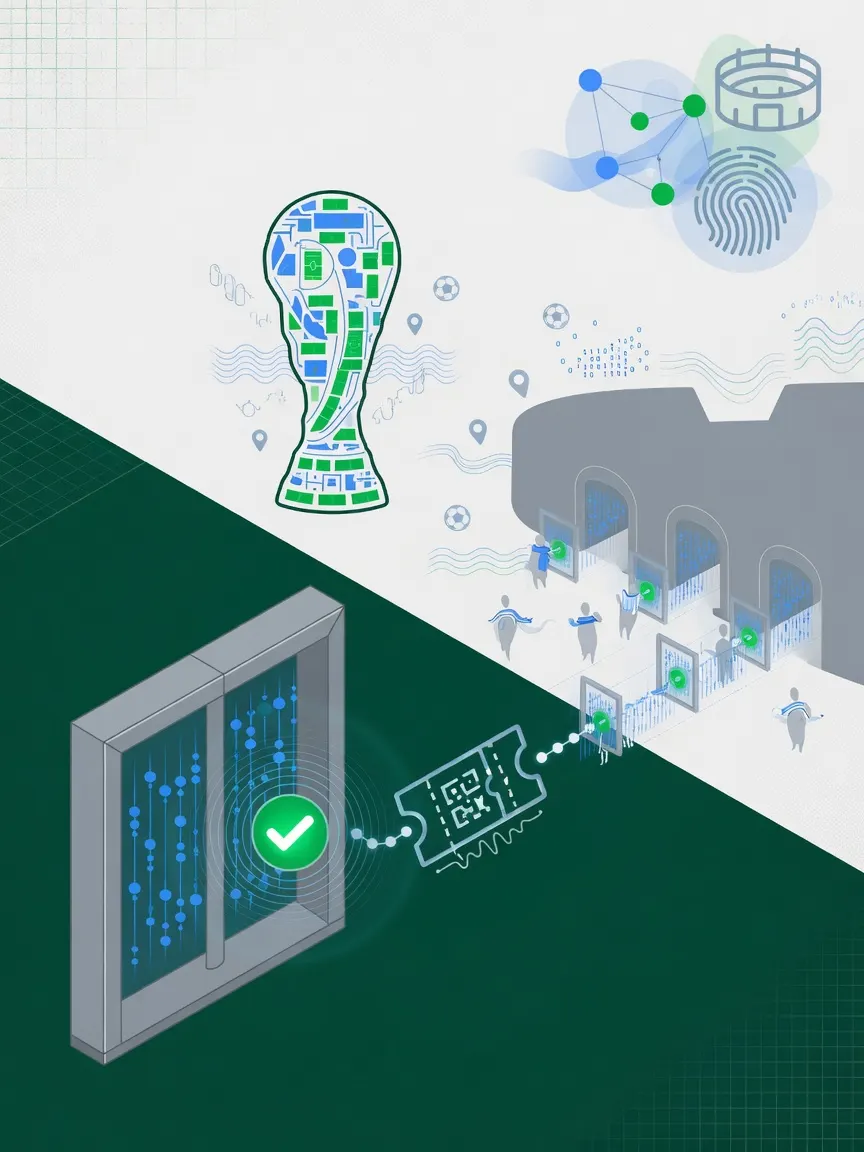
Face-scanning gates and a Google-powered AI guide are running quietly at the 2026 World Cup. Neither got a headline launch. Both will touch most of the tournament's 10 million visitors.
FIFA is deploying two parallel technology layers across venues in the United States, Canada, and Mexico. The first is a consumer-AI layer built around Google's Gemini, positioned as an on-site assistant for fans navigating the tournament. The second is a biometric ticketing system that reads faces at stadium gates, replacing physical or digital tickets with a scan. The two systems are distinct but adjacent, and together they amount to something closer to an identity-and-AI infrastructure than a fan experience upgrade.
The real story is normalization at scale. Facial-recognition ticketing at sporting events has been piloted before, but rolling it out across three countries for 10 million people is a different order of magnitude. For Google, the Gemini integration is a high-visibility proving ground at a moment when the AI market is fiercely contested. Both technologies get harder to oppose the more ordinary they feel.
The EU's AI Act places strict limits on real-time biometric identification in public spaces. Tournament venues in North America are not covered by it.