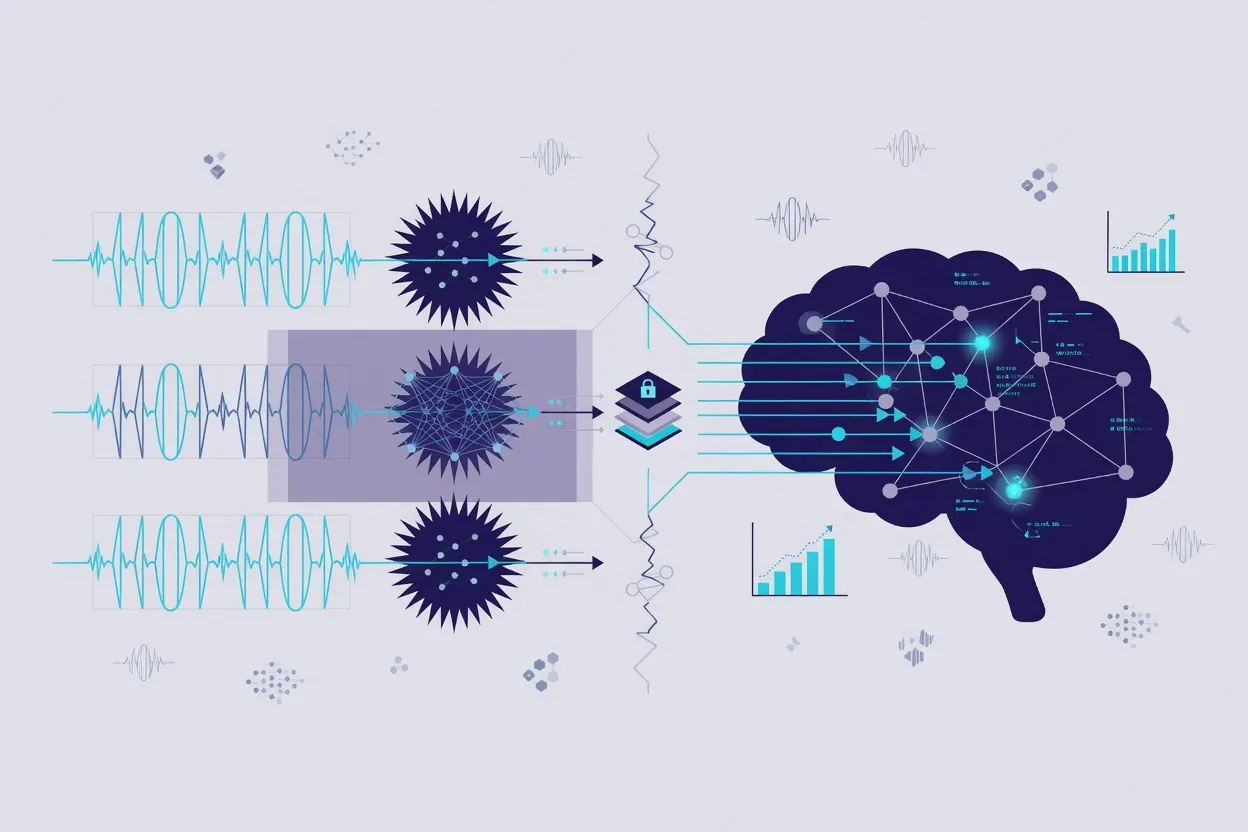
A pretrained time-series model with no EEG-specific training still works as a competent feature extractor for brain signal analysis.
Researchers ran a controlled comparison of three approaches to pulling temporal features from EEG data: a simple linear baseline, a convolutional encoder, and a frozen version of MOMENT, a general-purpose time-series foundation model. All three were slotted into the same EEG framework and tested on two tasks - motor imagery classification and emotion recognition. The linear baseline held its own on motor imagery, where signal patterns are relatively coarse. Emotion recognition, which demands finer temporal resolution, favored the richer representations that MOMENT provided.
The finding matters because EEG data is scarce and expensive to label - building specialized foundation models from scratch is slow work. If general time-series representations transfer reasonably well in a frozen state, researchers can borrow from the larger pool of models trained on finance, weather, and industrial sensor data rather than waiting for EEG-native alternatives to mature. That changes the resource calculus for clinical and brain-computer interface research.
The caveat: MOMENT was not fine-tuned here, and results varied by task - so this is a promising signal, not a prescription. The field has seen similar cross-domain transfer stories before, and they rarely survive contact with the messiest real-world datasets.