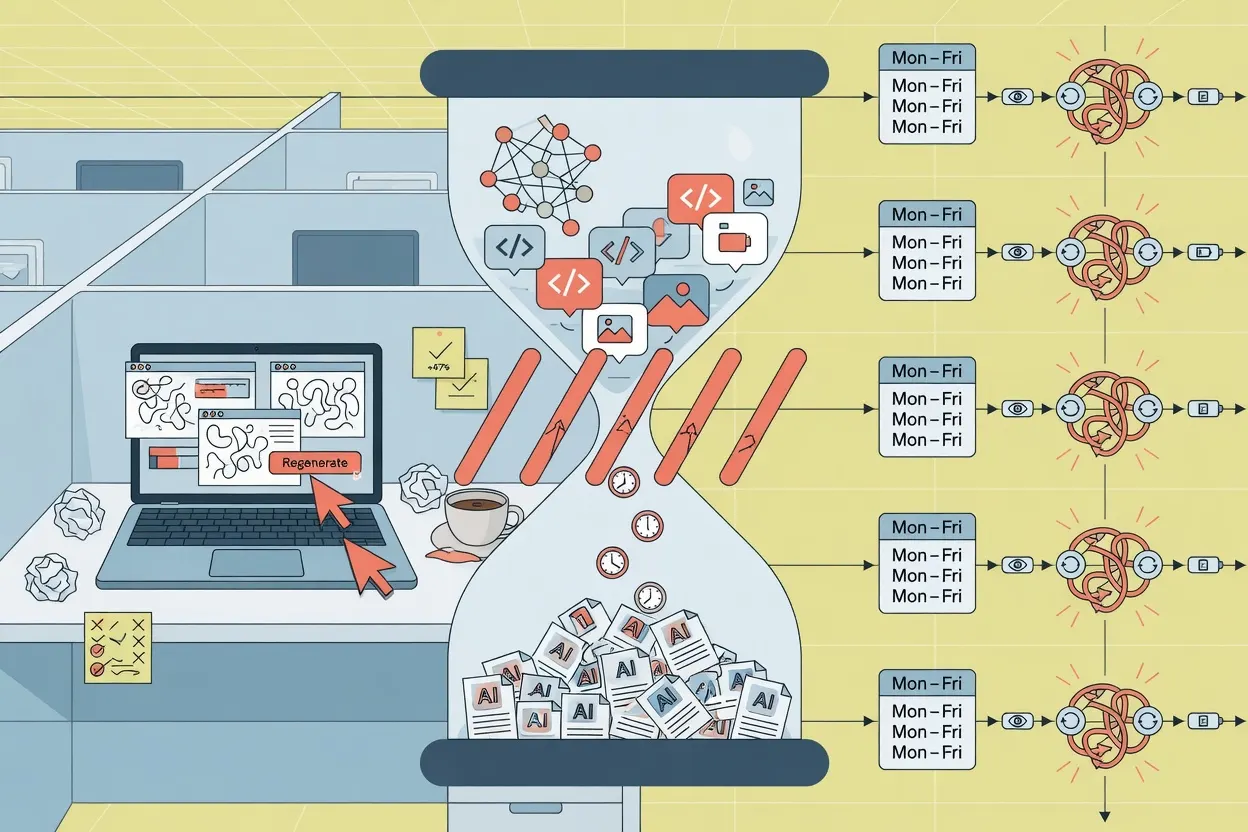
Add up the prompts double-checked, the outputs corrected, and the approvals rubber-stamped: workers are spending more than six hours a week supervising AI tools, a burden that now has its own name: botsitting.
A new report finds that AI adoption at work has created a category of invisible labor. Employees aren't just using AI assistants; they're managing them, catching errors, and validating outputs before anything gets sent upstream. The workload is significant enough that it's flipping the script on AI as a productivity tool, generating frustration instead of the time savings companies pitched when they deployed these tools.
Six hours a week is roughly 15 percent of a standard 40-hour workweek. If those hours aren't offset by genuine savings elsewhere in the workflow, the productivity math collapses, and organizations end up paying software subscriptions to create a new category of invisible work that didn't exist two years ago. For workers who were told AI would lift the tedious tasks off their plates, spending a sixth of their week as an AI supervisor is not the arrangement they agreed to.
Every technology shift creates adjustment costs; that part isn't new. What's different is that AI was sold specifically on the promise of reducing labor, not redistributing it under a new job title nobody asked for.