A new framework published to arXiv aims to fix the part of autonomous research that nobody talks about: getting agents to actually work together.
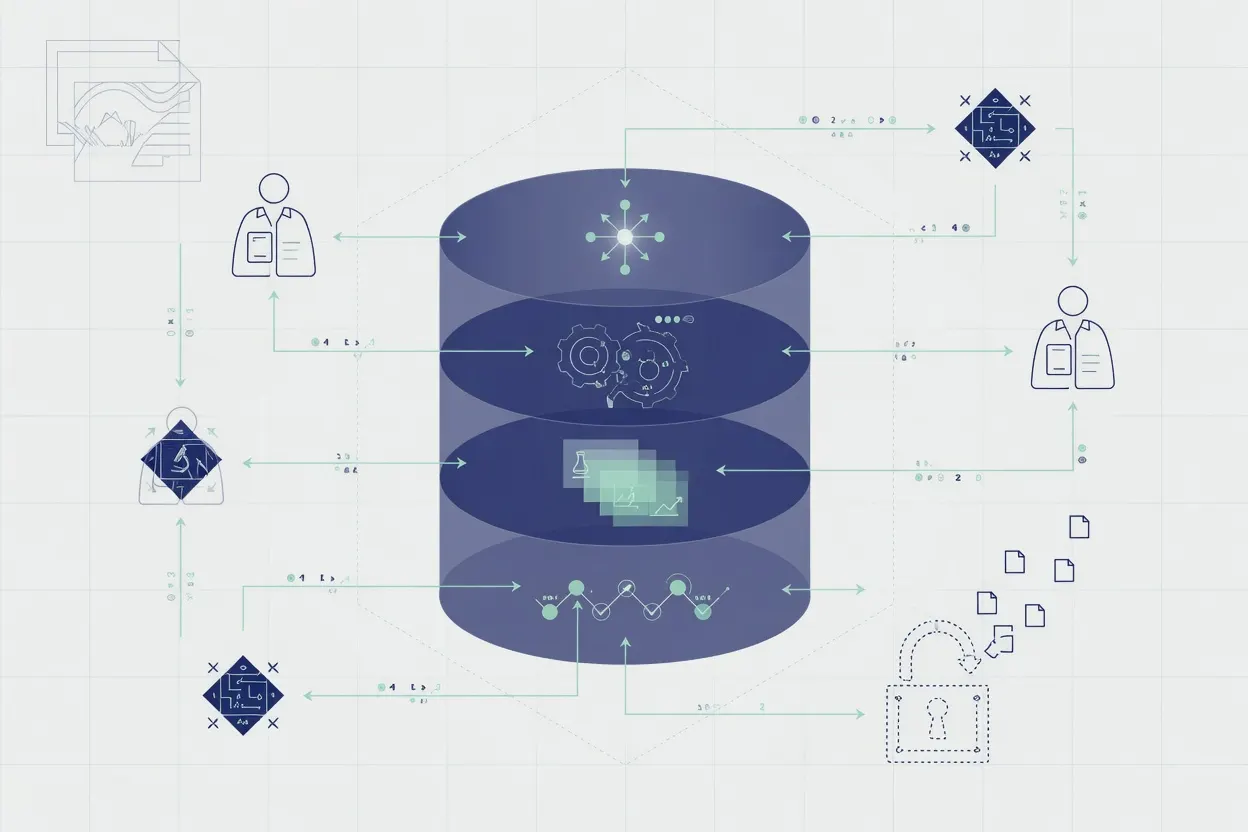
Holosai's Clarus paper argues that existing autonomous research agents treat science as either a solo assistant task or a rigid closed workflow. Neither model scales. Clarus proposes a four-layer infrastructure — Research Application, Digital Collaboration, Physical Substrate, and Physical World — built around a minimal object model of projects, agents, and resources. Participants can be AI systems, individual humans, teams, or entire organizations. A controlled case study showed the system organizing a paper-generation goal into a traceable, attributable collaboration network across phases and tasks. Code is live at clarus.holosai.io.
The coordination problem Clarus targets is real: multi-agent research pipelines today mostly pass outputs sequentially rather than collaborating under uncertainty. Framing agents, humans, and labs as interchangeable participants in an auditable process is a meaningful design choice — it makes attribution and trust mechanisms first-class, not bolted on later.
Clarus is early — a prototype validated on a single case study — and the gap between a clean object model and messy real-world lab infrastructure is wide. Worth watching to see whether the auditable-collaboration pitch holds up outside controlled conditions.