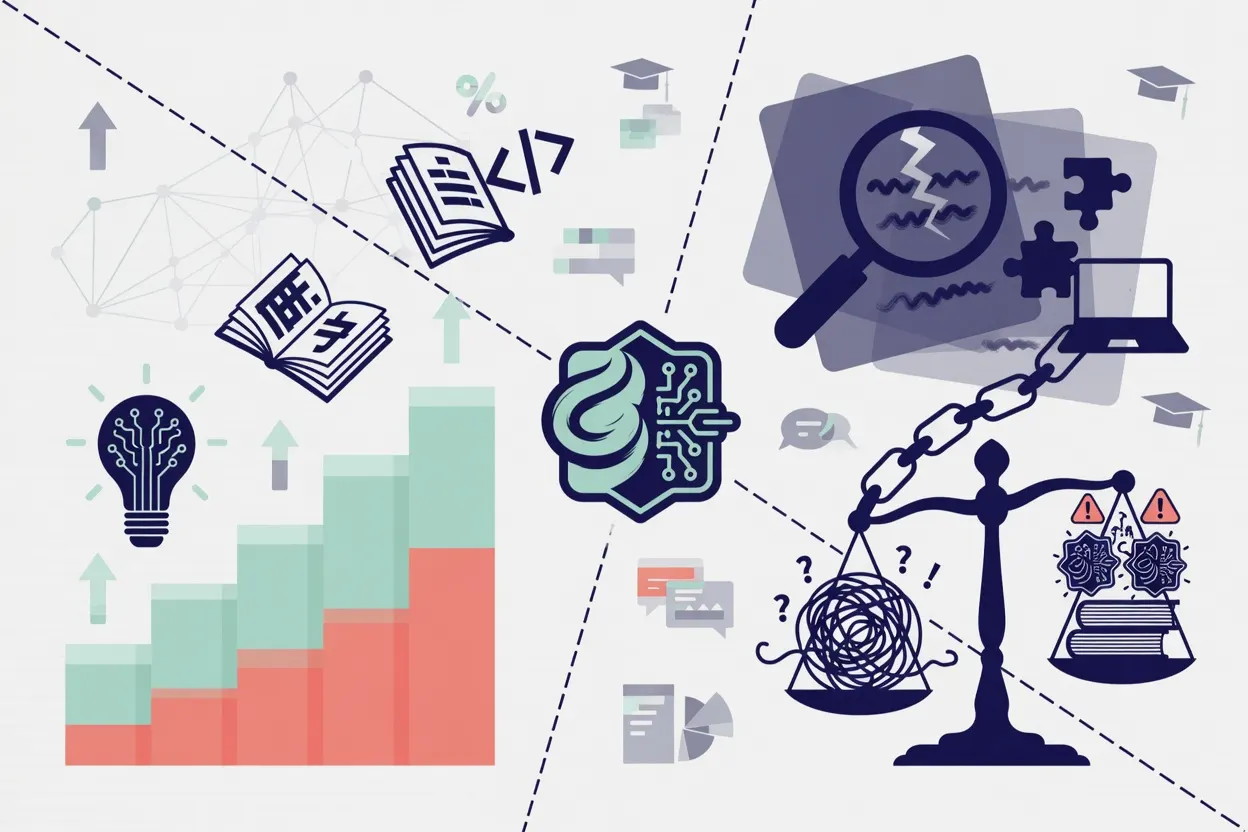
Generative AI is improving grades for humanities students in China — but the picture is more complicated than that.
A study drawing on a large-scale survey of humanities and social sciences (HSS) students in China examined GenAI use across four areas: usage patterns, effects on learning and performance, challenges, and preferences for how it gets built into curricula. More than half of respondents said GenAI improved their learning motivation, independent thinking, and creativity. An even larger share reported academic performance gains — though the researchers flag that this may partly reflect weaknesses in how conventional assessments are designed, not genuine mastery.
The gap between those two findings is the most interesting part. If students feel smarter and score better but those scores are partly a measurement artifact, institutions face a harder calibration problem than a simple "ban it or allow it" policy debate. The study also found that students who had used GenAI longer reported different perceived outcomes than newer users, with disciplinary and modest gender differences layered on top.
On the concern side, limited accuracy and overreliance ranked as the biggest problems students identified — a pairing that should give any educator pause, since overreliance compounds the accuracy problem. Privacy satisfaction was also low: most students said ethics mattered, but barely half were satisfied with how their data is handled. Students preferred partial or optional integration backed by hands-on training, rather than wholesale embedding of GenAI into coursework. The finding lands at a moment when Western universities are still arguing about whether to permit AI in essays at all — Chinese students, it turns out, are already past that debate and asking for better guardrails.