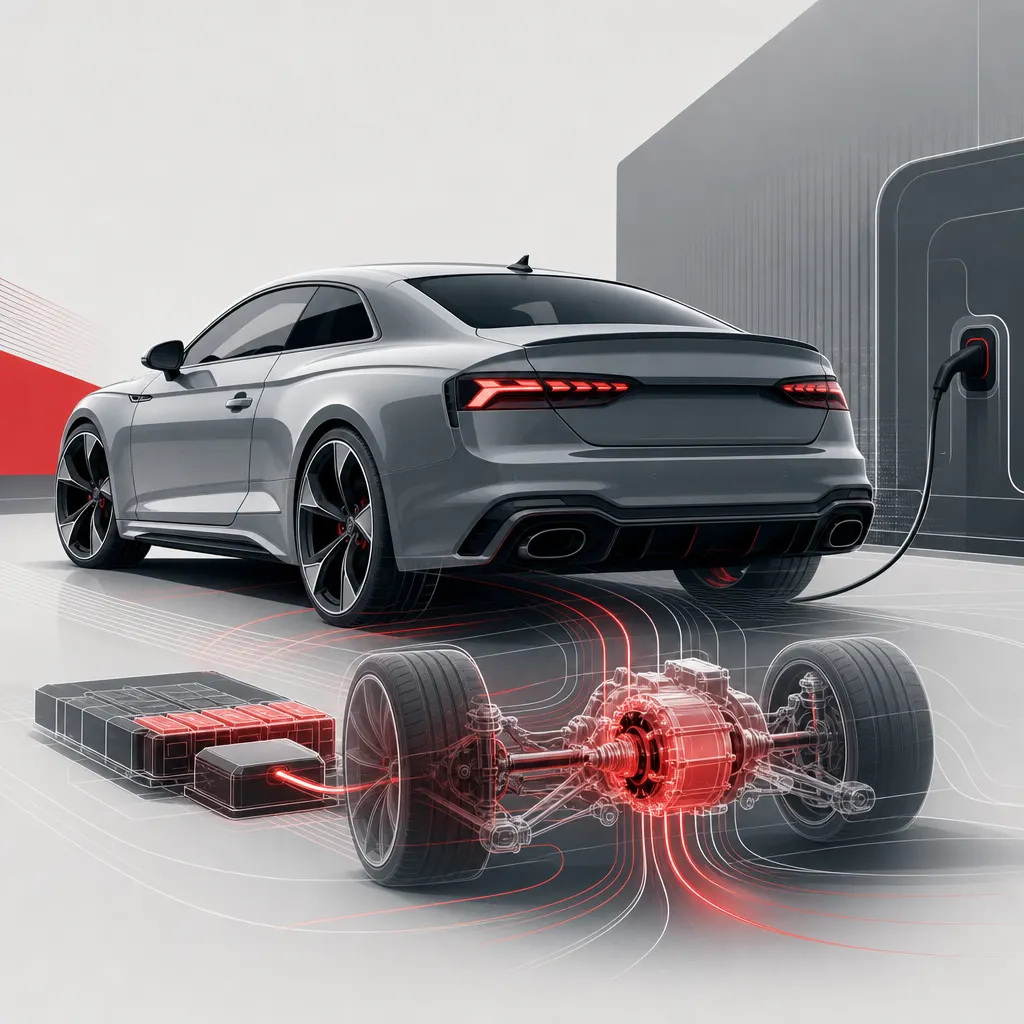
Audi's next RS5 is a plug-in hybrid, and its mechanical centerpiece is an entirely new electric torque-vectoring rear differential.
The 2027 RS5 marks a platform shift for Audi's mid-size performance coupe, moving to a PHEV architecture. The standout addition is a brand-new electric torque-vectoring rear differential developed by Audi. Electric torque vectoring distributes drive between the rear wheels almost instantaneously, with less mechanical lag than traditional limited-slip or hydraulic systems. That combination of instant electric response and combustion output is the core promise of the PHEV format.
The significance isn't just the hardware. Torque vectoring at this level has historically lived in six-figure sports cars; putting a from-scratch electric system in a production performance coupe signals that electrification is pushing capability downmarket faster than expected. It also gives the RS5 a genuine technical differentiator over rivals, rather than the usual horsepower-and-0-60 spec race.
PHEV performance cars that can't reconcile their two power sources tend to feel like committee decisions. The engineering here is credible. Whether the driving character is, too, is the harder question.