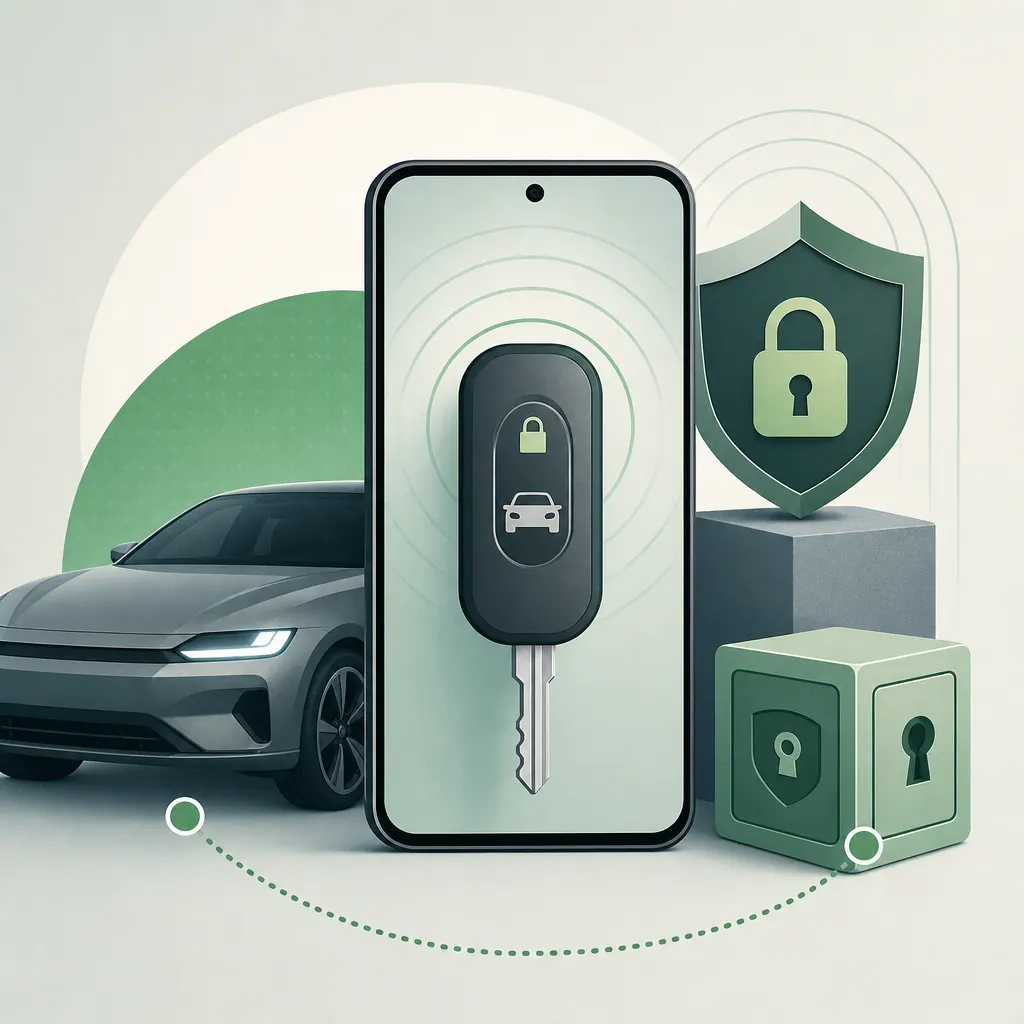
Your Android phone can already replace your car key — and the security behind it is more thoughtfully designed than most people assume.
Digital car keys on Android store credentials in the phone's secure element, a dedicated hardware chip isolated from the rest of the operating system — the same architecture that guards contactless payment cards. The feature uses NFC for close-range unlocking and, on supported hardware, Ultra-Wideband for passive entry without pulling out your phone. Compatibility requires matching hardware on both the vehicle and the handset, so your first stop is confirming your car is on the supported list. Critically, credentials can be revoked remotely: a stolen phone doesn't automatically hand over your vehicle.
The reason this matters now is that physical key fobs aren't actually the gold standard people treat them as. Relay attacks — where thieves amplify the signal from a fob sitting inside your house to unlock a car in the driveway — have been a documented, growing problem for passive entry systems. A phone key locked behind biometrics and remotely revocable arguably tightens some of those gaps in a way a plastic fob never could. The feature has been maturing for a few years, long enough that the sharp edges are mostly smoothed.
The real friction isn't security — it's the compatibility matrix, which remains a genuinely tedious thing to navigate before you commit to leaving your physical key in a drawer.