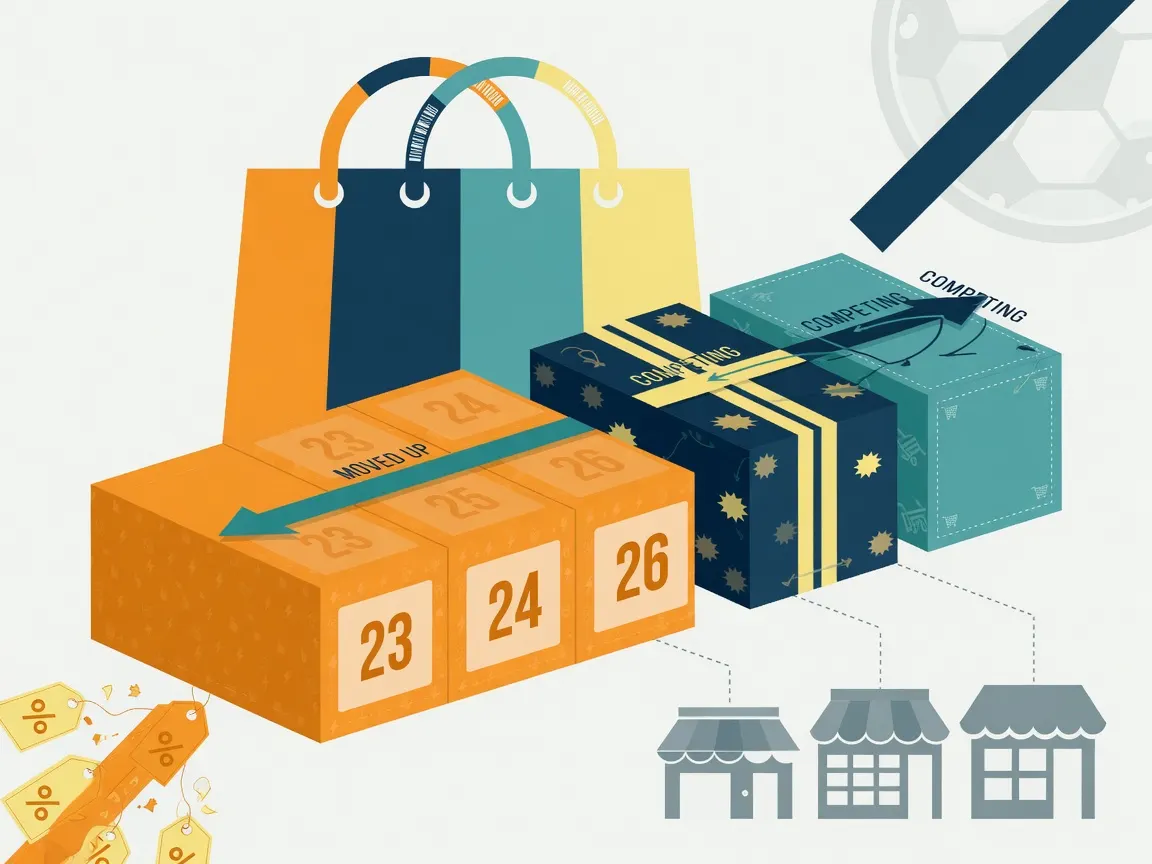
Amazon's biggest annual sale launched a few weeks ahead of its usual mid-July window — and for the second year running, it lasts four days instead of two.
Prime Day 2026 runs June 23-26. Amazon's worldwide VP of Amazon Prime cited the FIFA World Cup (running through July 19) and the U.S. Semiquincentennial on July 4 as reasons for the calendar shift. The subtext: Amazon wants to be the place you stock up before summer celebrations, and it has been pushing hard into groceries. Before the sale proper, the company is giving away $10,000 in grocery gift cards to shoppers who spend at least $15 on groceries, beauty, personal care, or pet supplies through June 22. Early deals are already live, with up to 65% off Amazon's own hardware — Echo speakers, Kindle e-readers, Fire TV sticks, Blink cameras, and eero mesh routers.
The date change matters because it compresses the summer deal calendar in a way that actually benefits shoppers. Best Buy is running a weeklong Tech Fest from June 22-28 — nearly twice Prime Day's length — with up to 50% off laptops, TVs, and headphones, and no paywall requirement. Walmart has a concurrent Summer Deals event on the same dates. Amazon's premium on Prime membership looks thinner when two major competitors are offering comparable discounts without a subscription fee.
For the sale itself, Amazon has flagged discounts up to 50% on coolers and drinkware from Hydro Flask, Stanley, and Yeti; up to 45% off headphones from Beats, Bose, and JLab; up to 40% off TVs from Hisense, LG, and Samsung; and up to 35% off laptops and phones from HP, Lenovo, and Samsung. New deals are supposed to drop as often as every five minutes during select windows, at 3 a.m., 11 a.m., and 4 p.m. ET — which is either exciting or exhausting depending on your relationship with alarm clocks.
The earlier timing is a smart hedge against July noise, but with Best Buy and Walmart matching the window almost exactly, Amazon's main differentiator remains the breadth of its own-brand hardware discounts.