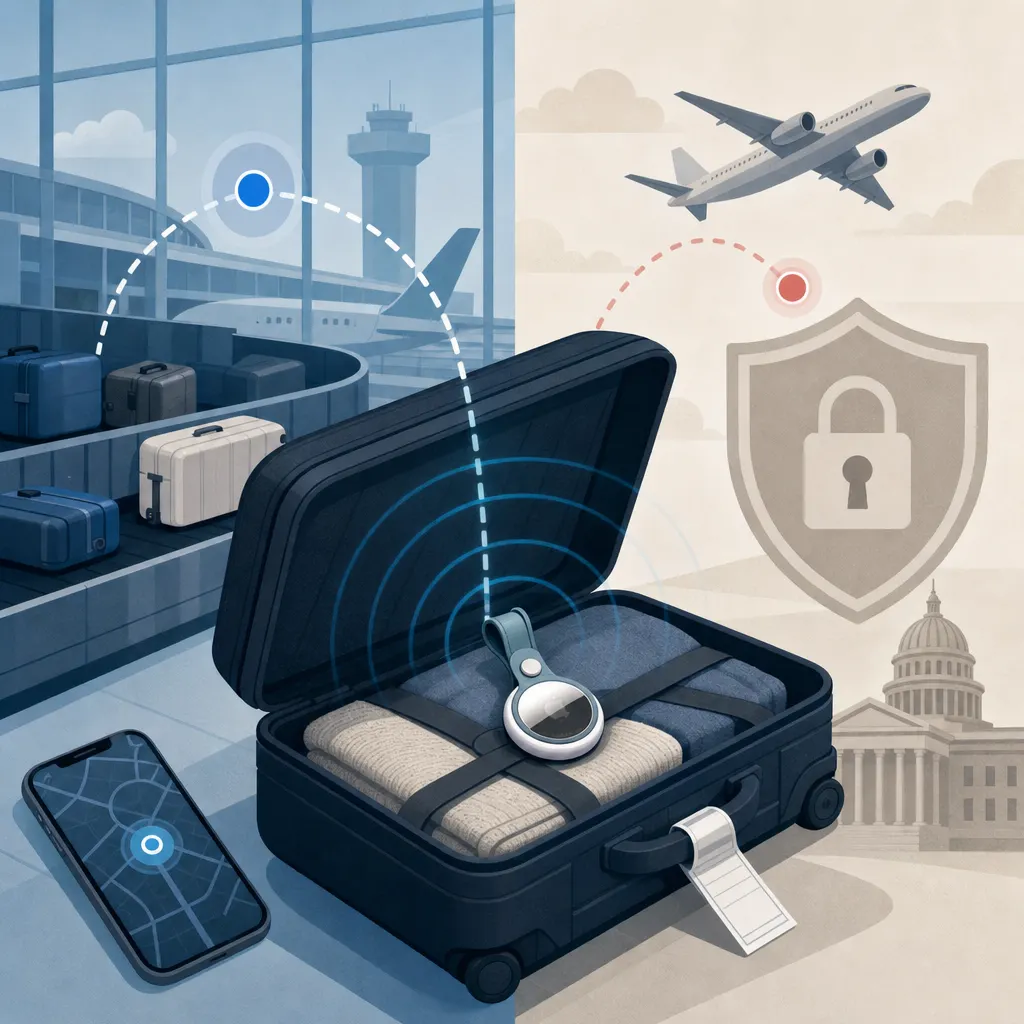
Airline lost luggage is a $2.5 billion problem annually, and Bluetooth trackers are the consumer response. Apple's AirTag remains the dominant option, but rivals like Pebblebee and CaseSafe offer Android-friendly alternatives that work on the same Find My network.
The trackers transmit location via Bluetooth to nearby phones, building a crowdsourced location database. If your bag goes missing, you see its last known location on a map. Airlines have largely stopped opposing the devices, though some have quietly updated policies to accommodate them.
The catch: these trackers help you find your bag, not prevent it from being lost. They don't transmit in real-time during flights—GPS requires cellular connections that AirTags lack. You're still relying on airline ground crews to scan bags properly. What you get is evidence: a timestamp showing your bag was in Chicago when you were in Los Angeles matters when filing claims.
Most travelers should buy at least one. The $29 AirTag is cheap insurance for a $200 checked bag. Just remove the tracker after arrival—leaving it inside a suitcase is useful for return trips but makes the bag permanently traceable, which raises obvious privacy questions if you're not the one carrying it.