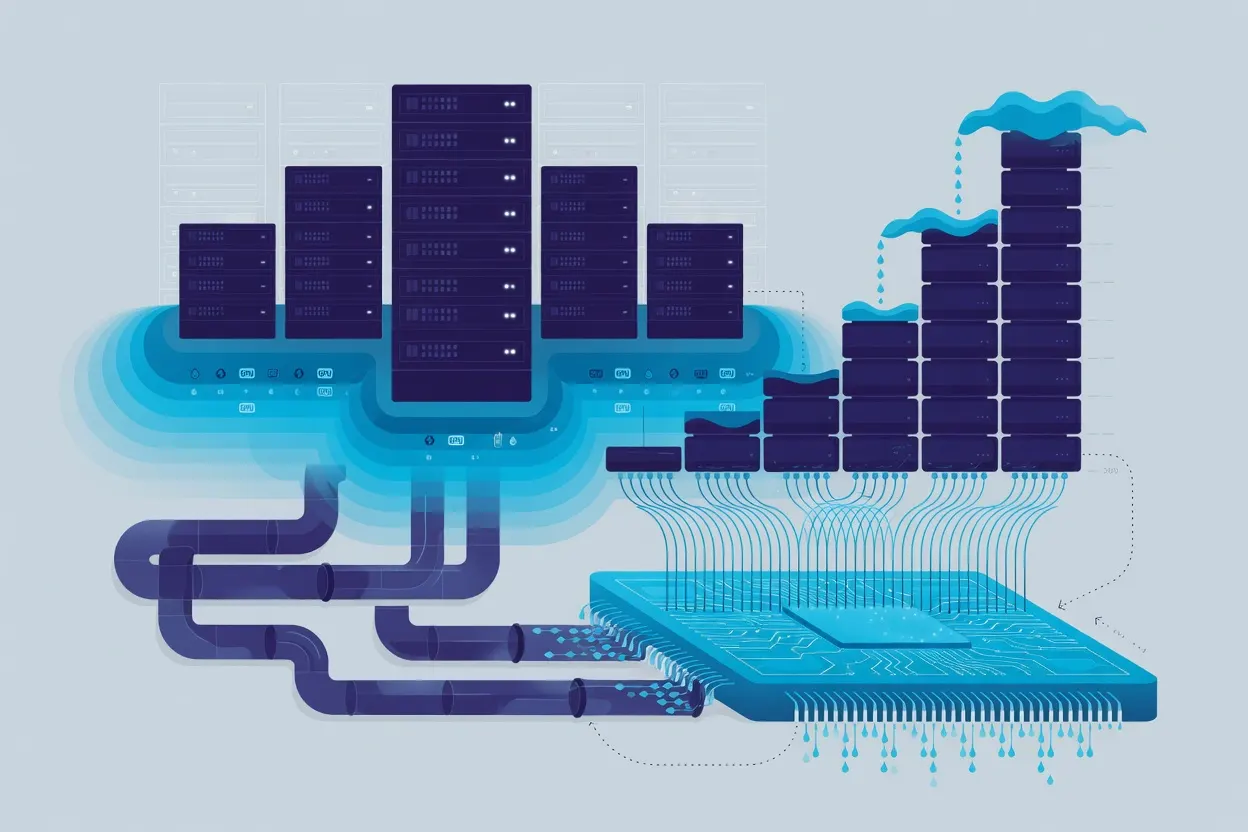
AI is on track to consume up to 600 billion gallons of water by 2030, and most of that bill is running up at the power plant, not inside the data center.
The link is indirect but significant. Generating electricity requires large amounts of water — power plants cycle it for cooling — so as data centers draw more power, water consumption rises even when nothing changes about the cooling systems themselves. Direct liquid cooling of GPUs, the approach hardware vendors point to as efficient, accounts for only a fraction of AI's total water footprint. The primary driver is energy demand, and that demand keeps climbing.
That distinction matters for how the industry should be held accountable. Data center operators have spent years highlighting efficiency metrics — power usage ratios, liquid-cooled rack deployments — as evidence the environmental footprint is manageable. If water use is fundamentally an energy problem, those gains address the wrong variable. The projection may prove conservative: next-generation GPUs and rack systems are being designed for even higher power draws than today's hardware.
Every major cloud provider publishes a water stewardship report; check whether electricity generation is actually in scope.