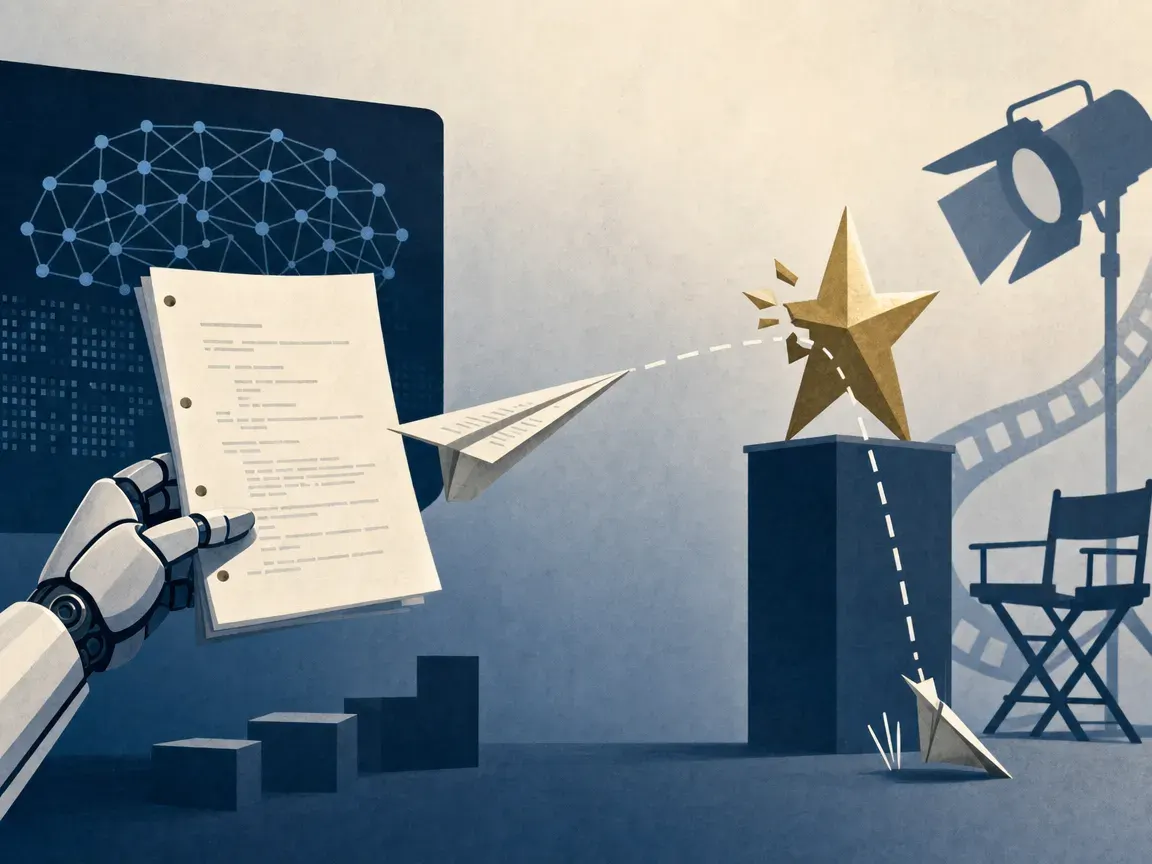
Quilty, an AI startup that promised to predict box office success from scripts alone, got its first big public test spectacularly wrong.
Earlier this year, Quilty arrived in the industry trades with a bold claim: feed it a screenplay, and it can tell you how the film will perform commercially. When users actually put the tool through its paces, the results were not reassuring. Quilty predicted that Christy — a film that went on to bomb — would outperform Sinners, which became an Oscar-winning blockbuster. That is not a near-miss; it is a direct inversion of what happened. The founders are leaning on the familiar pitch that their tool will "democratize" Hollywood by giving up-and-coming writers and producers access to the analytical firepower that big studios deploy.
The democratization angle deserves scrutiny. Major studios have spent decades building proprietary tracking systems, greenlight committees, and test-screening pipelines — and they still produce expensive flops regularly. If a script-reading model cannot distinguish between an award-winning hit and a commercial failure on films whose outcomes are now public record, it is not obvious what problem it is actually solving. The more generous read is that the tool is early and the founders are overpromising; the less generous read is that no one has yet found a reliable statistical signal between a screenplay and its revenue.
Plenty of startups have tried to crack Hollywood's prediction problem before, usually by arguing that data can do what taste cannot. Most have quietly faded. Quilty may improve, but starting with a high-profile reversal is a tough way to build trust in an industry where one wrong call can cost tens of millions of dollars.