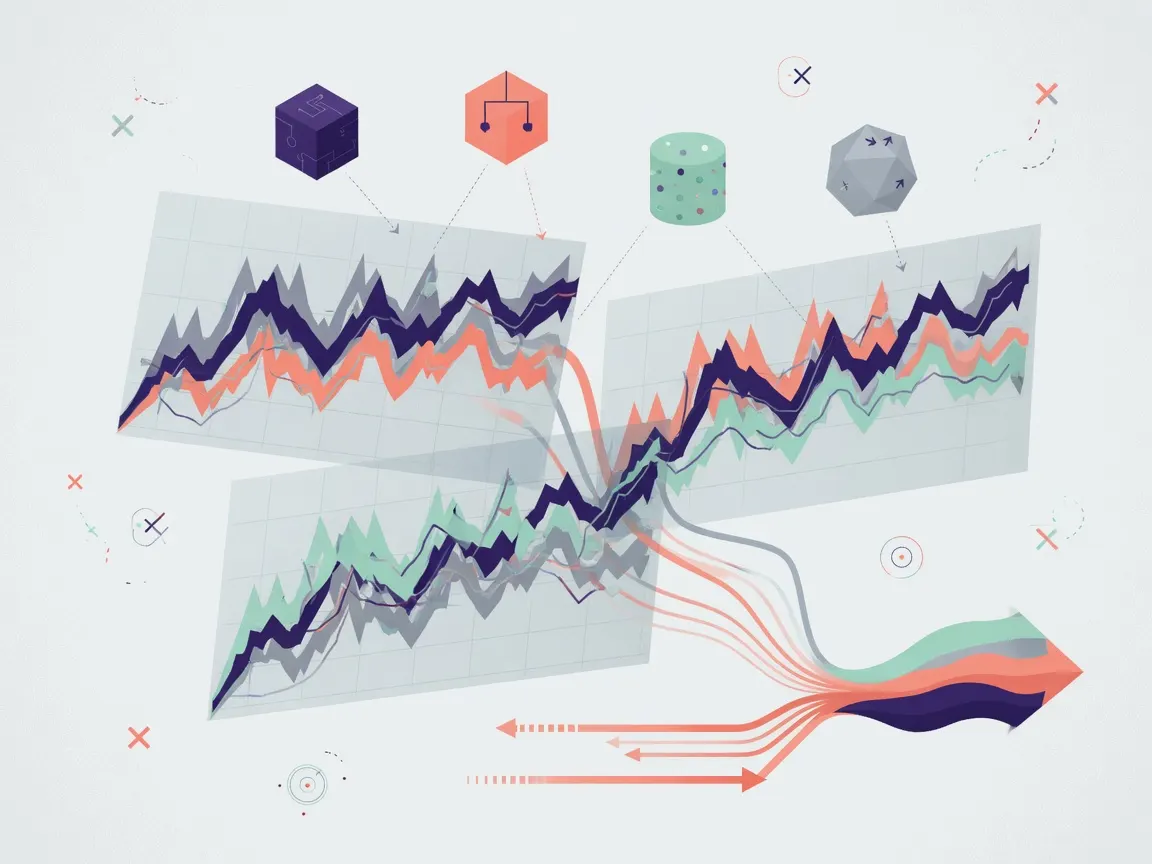
Mixing AI models that disagree with each other produces better forecasts than piling on more of the same.
Researchers studying AI forecasting on the Metaculus AI Benchmark found that top systems are nearing superforecaster-level accuracy on real-world predictions — but the gains come from how models are combined, not just which ones are used. The key finding: most frontier large language models make highly correlated predictions. Stack five of them and you're essentially getting one opinion with extra steps. The strongest ensembles pair accurate models with ones that make different kinds of mistakes, even if those models score lower individually.
Grok 4 shows up as a standout not because it's the most accurate forecaster in isolation, but because its errors don't track with other frontier models — making it unusually valuable in a mixed ensemble. That reframes how forecasting systems should be built: optimizing for model diversity, not just model quality, becomes a design requirement rather than a nice-to-have.
The broader implication is a quiet rebuke of the default "more compute, more models" instinct. If the top-tier LLMs are all learning from the same internet, trained on similar data pipelines, and tuned toward the same benchmarks, their predictions will converge — and their errors will too. Diversity in AI, it turns out, is not just an HR talking point.