Finding a bike that actually fits your body is harder than it should be. Most bike shops will tell you their frames run "true to size," which means almost nothing.
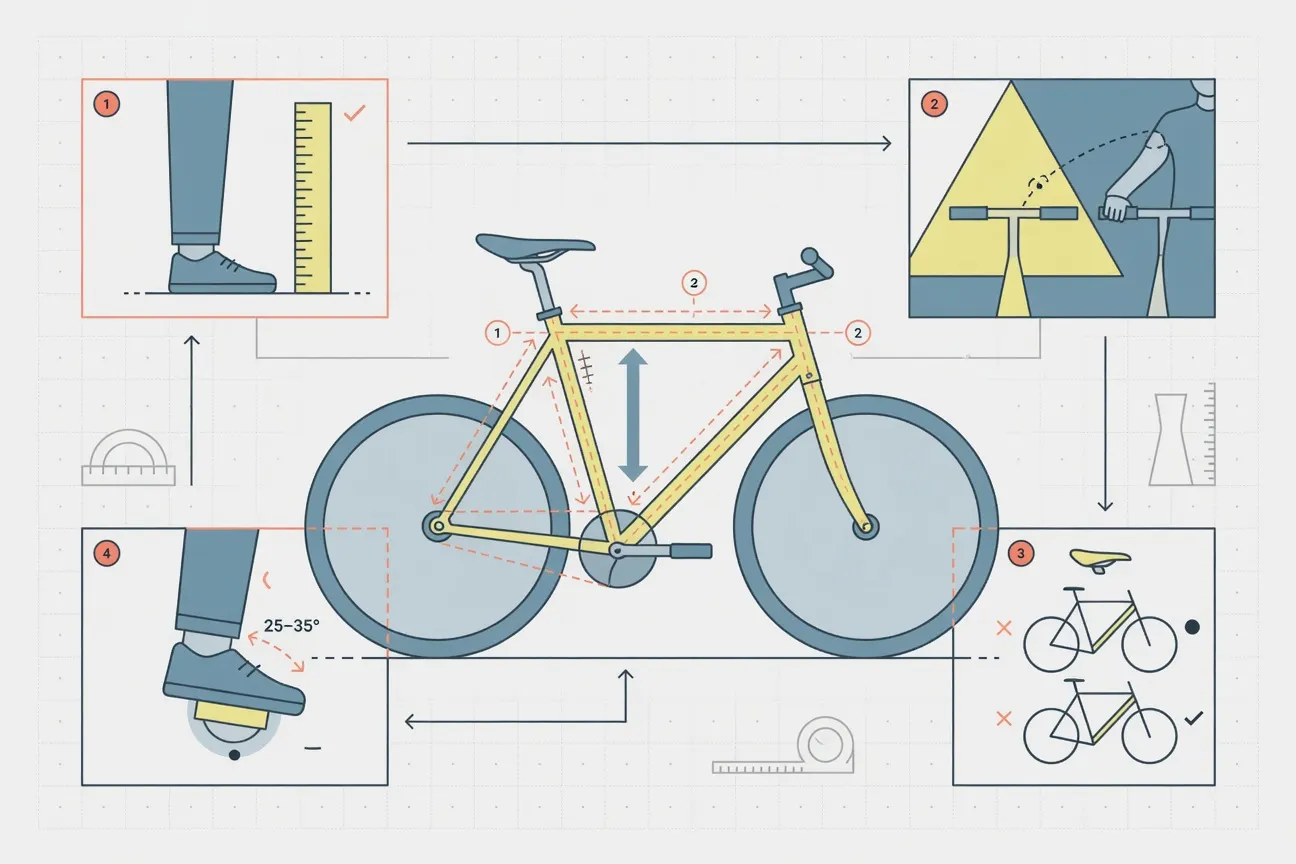
The process starts with your inseam. Measure from your crotch to the floor while wearing the shoes you plan to ride in. Multiply that number by 0.883 for a road bike, or 0.66 for a mountain bike — this gives you the effective seat tube length you need. Frame size charts are inconsistent between manufacturers, so this math beats trusting a sticker on the downtube.
Next, check standover clearance. You should be able to stand over the top tube with both feet flat on the ground and have at least an inch of clearance if you're on a road bike, two inches for mountain bikes. If the frame is too big, you'll hesitate before stopping. If it's too small, you'll feel cramped on longer rides.
Finally, test ride. Sit on the bike, put your hands on the hoods, and pedal backward. Your knee should be slightly bent at the bottom of the stroke — not fully extended, not deeply bent. If the shop won't let you ride for ten minutes, leave. Most reputable shops expect this.
The bike industry wants you to believe sizing is mysterious. It's not. Your body measurements are what they are. The real trick is refusing to pay for a frame that requires a stem raiser, seat post extension, or \"adjustment period\" to feel okay.